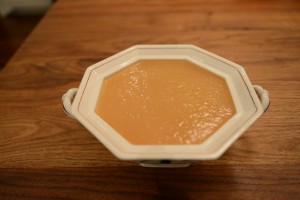
As the weather is becoming chilly in the northeast of the U.S. and the deciduous trees are changing their leaves from green to yellows, reds and oranges, I think of the foods I particularly enjoy cooking in the fall: soup, soup and more soup! It is important to me that soups smell, look and taste delicious as well as being healthy and nutritious, filled with ingredients high in antioxidants and phytonutrients and rich in vitamins.
I will note at the end of recipes different aspects of the ingredients used: antioxidant and phytonutrient benefits; how to interchange ingredients in order to increase calories; which recipes might be helpful to ameliorate certain symptoms and side effects of chemotherapy, radiation and surgery; and suggestions on how one may alter recipes to accommodate changes in taste.
Directions
- Sauté zucchini and squash in olive oil for 5 minutes; set aside.
- To the stock add leeks, potatoes, salt, pepper and the wine (optional). Bring to a boil, then lower heat and simmer for 25 minutes, or until potatoes are tender.
- Return the sautéed zucchini and squash to the pot.
- Let stand to reach room temperature, then purée the soup.
- Stir in half and half. Add salt and pepper to taste. Add more stock as needed to adjust for the thickness or thinness desired.
- Serve hot or at room temperature.
- Garnish with julienned zucchini and/or fresh chives.
℞ M.D. Notes
- Potatoes are a rich source of vitamins C and B6.
- Zucchini and yellow squash are rich sources of vitamins C and B6 and riboflavin, and a good source of fiber. Summer squash is a strong source of antioxidant nutrients found in the carotenoid family.
- Leeks are part of the onion family (Allium), related to garlic, chives and scallions. They have been cultivated for 3,000 years, originated in Asia and are a rich source of vitamin K and vitamin A. According to the AICR (American Institute for Cancer Research), animal studies have shown that components of allium vegetables have slowed the development of cancer in several stages and at various body sites: stomach, breast, esophagus, colon and lung.
- To increase calories, substitute full-fat half and half or heavy cream for the fat-free half and half. Sauté with butter and olive oil instead of solely olive oil. Add a dollop of crème fraîche as garnish.
- Puréed soups are soothing for a sore mouth and throat following chemotherapy; serve at room temperature or cold. Soups are also a good food choice if one is having problems swallowing. One may also find it helpful to eliminate strong spices during this time.
- In dealing with one's altered taste buds during chemotherapy, you may want to try: adding a bit of sweetness with maple syrup; a squeeze of lemon if you are experiencing a metallic taste; a few drops of lemon juice if a food tastes too sweet or salty; a bit of maple syrup if food tastes too bitter.
- Soups are helpful when needing more fluid in one's diet.